
The Long Road to Systematic Investing

If you'd told me twenty years ago that I'd eventually stop picking individual shares almost entirely, I wouldn't have believed you. Like most private investors, I started in exactly the same place: buying investment magazines, reading company reports from 7am, and always hunting for the next great idea. I genuinely enjoyed it, it was part of my identity. However, unbeknown to me at that point, was that I had no real skill, or edge or risk management in play. I was “retail”; I was the “herd”. What I didn't see coming was where the journey would actually lead.
Looking for more than money
A little background first: throughout my career I worked in various technical roles for a number of big blue chip firms, and the work covered big data analysis, econometrics, statistical modelling, and coding projects that more often than not, involved separating signal from noise in various messy datasets. It was the kind of work where you learn quickly that what looks like a pattern often isn’t, and that the most dangerous conclusions are the ones that feel most obvious.
Alongside all of that, I had a separate goal. Financial independence. Not because I wanted luxury or to spend my days doing nothing (although that does sound tempting!), but because I wanted control over my own time. I wanted to walk my dog without constantly checking my phone, cook good meals properly, work-out without rushing, travel when I wanted to rather than when I was allowed to, and so on. That was the real objective, and investing seemed like the obvious route to it.
Learning to pick good companies
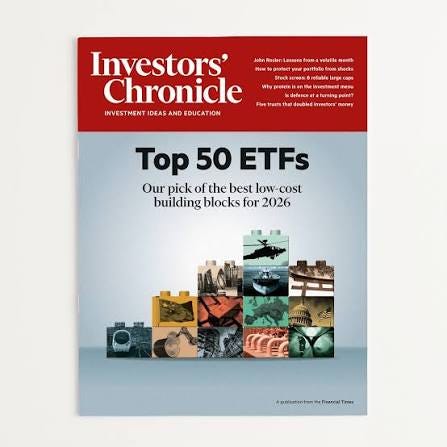
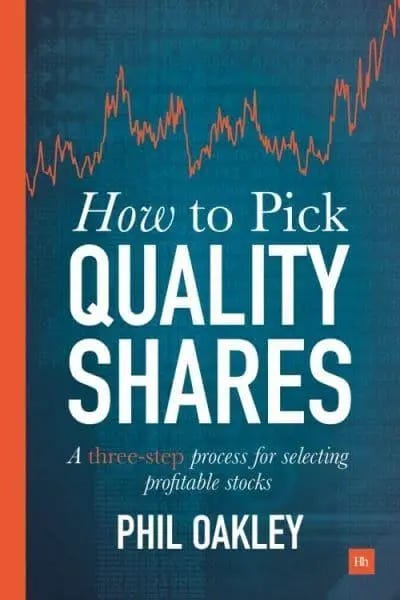
After the magazines my early education came through quality investing and fundamental analysis, and I spent a lot of time absorbing Phil Oakley and Simon Thompson's work in Investors' Chronicle and their books, learning about company valuations, what makes a genuinely good business, and how to read accounts properly. I remember the quiet excitement when “ST’s” column dropped - scanning it quickly, wondering whether the opportunity was still there before everyone else piled in. Yep, I was still “retail”!
Looking back, that period taught me a great deal. But it also planted a question I couldn’t quite shake.
If thousands of people were reading the same column at the same time, where exactly was the edge I thought I possessed?
Searching for a better process
That question attracted me towards more technical approaches. So I then joined a private investing community, and got involved with a professional technical investing website run by a well-known and respected UK investor. I spent years learning trend following, technical analysis and risk management properly rather than casually. By this point I could say I felt like a “professional” not “retail”. I was trading in a very different way: risk management first, and looking for certain key set-ups where technicals and fundamentals aligned. I started to do consistently well, performing ahead of the funds and most private investors. I could flick through hundreds of charts and find the ones that mattered right away.
It was genuinely valuable. I stopped thinking that investing was simply about finding the next winning share. Risk management started to matter as much as returns - maybe more. Some of my stock picks had gone badly, but the losses were always small and controlled, whereas winners were allowed to run or even topped-up and dominated the P&L. That discipline stuck with me.
There was still a slight issue though. These approaches demanded consistent attention and lots of time: charts to review, reports to read, judgement calls every day and week. When life got busy, and life always gets busy, it became harder to execute the process properly. There were also large stretches of time when the system was essentially “off” and not “in play”. That was when a different question started to nag at me.
Could I honestly keep this up for the next thirty years? When would I stop?
The moment things shifted
The real shift started when I watched a few Stockopedia presentations. I still think it’s one of the best resources available to private investors in the UK or US - its screening tools and ranking system showed me the power of systematic thinking more clearly than anything I’d encountered before. But what stopped me in my tracks wasn’t the tools themselves. It was the backtests.
I kept seeing systematic stock strategies that had delivered long-term CAGRs of between 15 to 22%. These were systems where a few stocks were selected based on their techno-fundamental scoring system and then essentially left for a whole year. I wasn’t looking at lucky years. I was looking at what a well-designed system could do when you let it run. However, there were still issues as these systems had drawdowns of more than 40% plus which could ruin you unless you could hold on psychologically and then what if you needed the money at that time or just how long would that drawdown go on for? Essentially the headline CAGRs were attention grabbing, but adjusted for risk (see my post below on drawdown and the Calmar ratio), they didn’t hold up, and when they tried to add stops the CAGR collapsed.

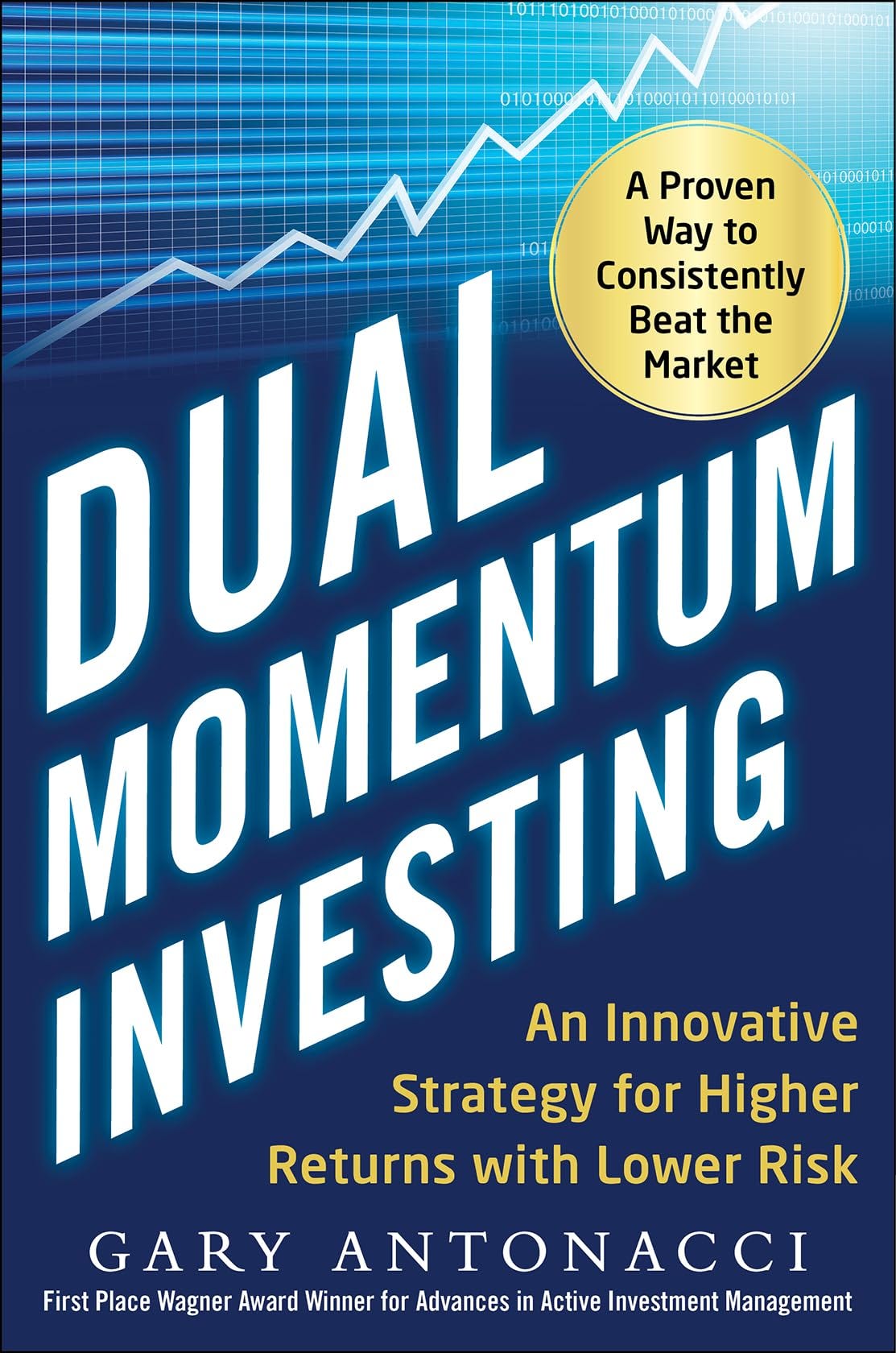
Around the same time I discovered the work of Gary Antonacci, Meb Faber and others writing seriously about systematic investing. For the first time, my professional background and my investing interests started to converge. Years spent building econometric models and testing statistical hypotheses suddenly felt directly relevant. I knew how to interrogate a backtest. I knew what data-mining looked like. I knew the questions to ask before trusting a result.
My professional instincts took over. I stopped looking for winning companies and started looking for a winning process.
Building something I could trust
The process I eventually built didn’t arrive quickly. It took months of research, coding, testing and refinement. Every assumption got challenged. I compared approaches, tested parameters, used out-of-sample data and walk-forward analysis, and kept asking myself one question throughout:
Is this genuinely robust, or does it just look good in hindsight?
The major shift was also moving to ETFs, no more reading stock reports daily, far less churn, lower trading costs, more liquid and less prone to large volatile swings. Much safer and easier to sleep at night! Niche ETFs were not required, vanilla ones with long histories were what was needed.
That instinct, to try to disprove it before you trust it, came directly from my working life. It’s also why I still revisit the process I have built annually now. Not because I’m chasing something new, but because I think any serious investment process should be able to stand up to fresh scrutiny. Markets change. Assumptions that were reasonable ten years ago aren’t always reasonable now.
And so drawdown control became just as important to me as returns, more so, actually, once I started thinking seriously about sequence risk and what it means to draw income from a portfolio rather than simply grow it. A system that produces 20% a year but occasionally drops 40% is a very different proposition for a retiree than it is for a thirty-year-old with decades of contributions ahead of them.
Where things stand now
I still enjoy reading financial research and following markets. But I no longer feel the need to react to every headline or every company report. The system does the work. That doesn’t mean uncertainty disappears, it never does, and anyone who tells you otherwise is selling something. What I found instead was something more useful than certainty: a process I believe I can follow consistently, through bull markets and bear markets and all the dull months in between, while getting on with the rest of my life.
Walking the dog. Cooking something decent. Getting to the gym. Going somewhere new when the mood takes me. That was always the real objective. The investing was just the means to get there.
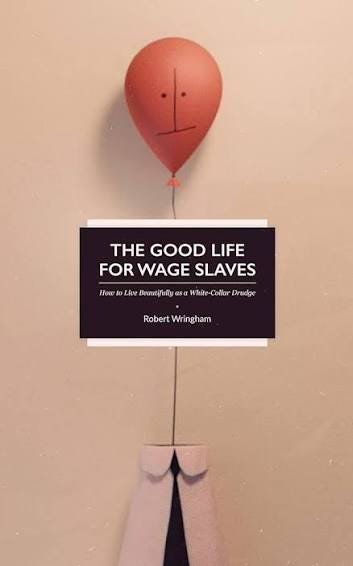
A few years ago I read Robert Wringham’s The Good Life for Wage Slaves. Although it isn’t an investing book, it put into words something I’d been moving towards for years. The purpose of investing wasn’t simply to accumulate more money. It was to create the freedom to spend more time on the things that actually matter - family, friends, health, learning, travel and the simple pleasures of everyday life.
The point wasn’t simply to build wealth. The point was to build a life in which wealth no longer dominated my thoughts - “the good life”.
For me, that was the real objective all along.
If you enjoyed reading this, and want to learn more about the Retirement Portfolio, a simple ETF system that takes 10 minutes a month to run and delivers 15%+ CAGR with a maximum daily drawdown of -12.3% then sign up below, thanks.
Really insightful and genuinely enjoyable to read. Lots of similarities to my own experiences as well